

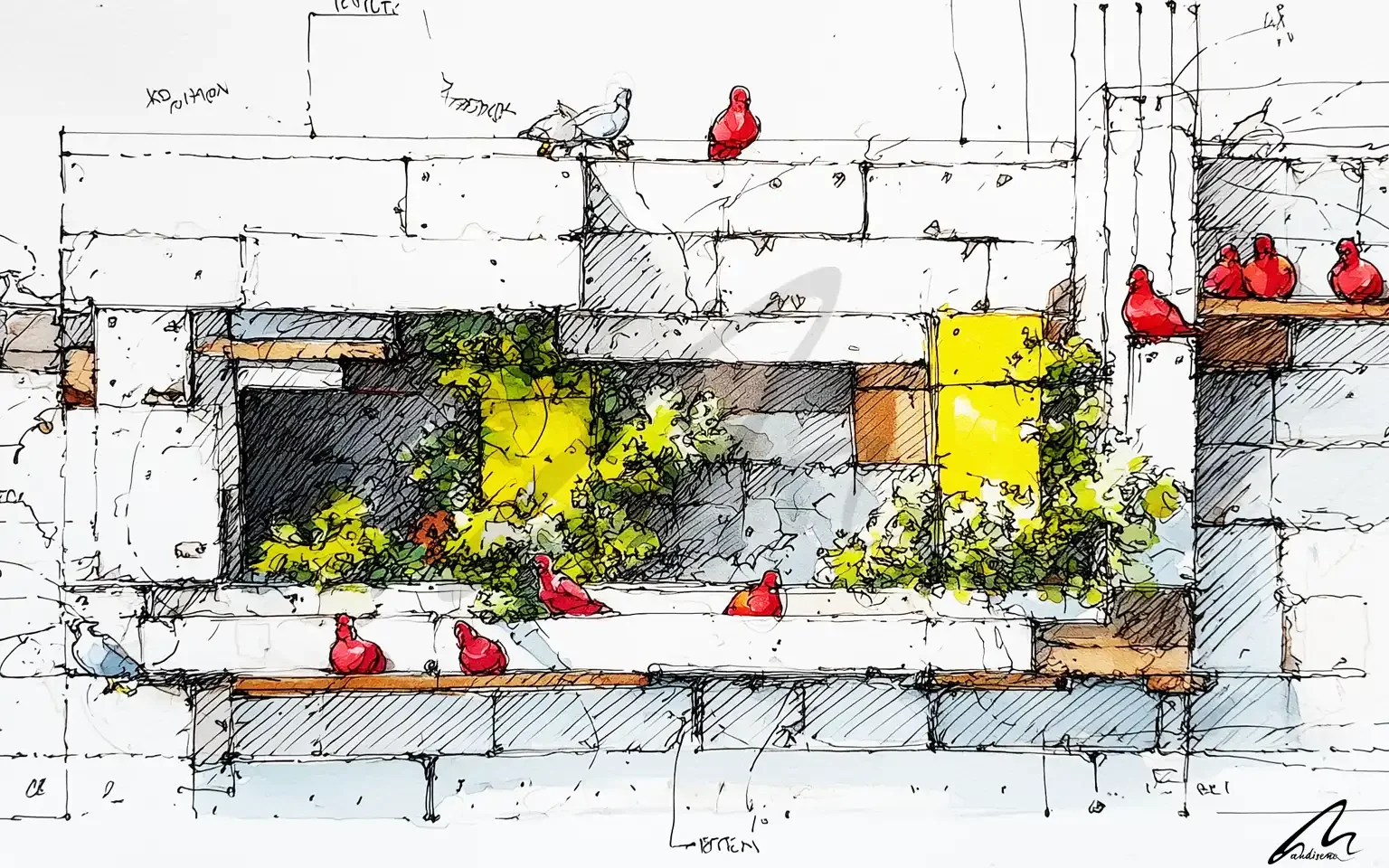
A City’s Surfaces Are Speaking; Just Not to Us
The other morning, I saw a pigeon tuck itself into a cracked facade panel near a drainpipe. I’ve seen this before — in vents, gaps, loose cladding, and ledges. And it made me think about birds and facade design — how one species’ nesting instinct is shaped by the small decisions, mistakes, and edges we leave behind in architecture.
Birds aren’t just adapting to cities. They’re responding to how buildings are made, where they break, and what those breaks provide.
How Birds and Facade Design Overlap Daily
To architects, facades are insulation, shading, or enclosure systems.
To birds, they’re full of clues: about airflow, shelter, predators, and safety. Every vent, cavity, or overhang becomes a possible refuge — especially in cities where trees and traditional habitats have disappeared.
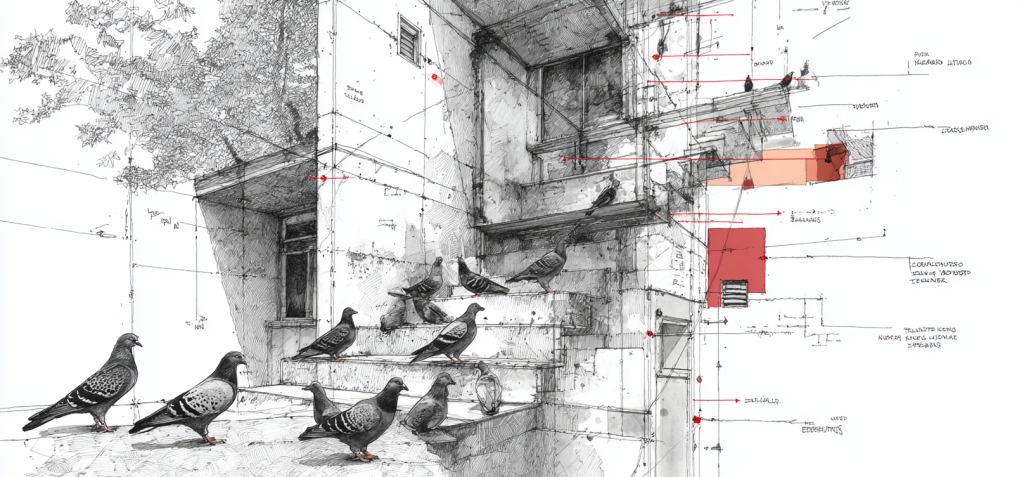
Common overlaps between birds and facade design:
- Gaps create protected wind zones
- Ledges trap heat, offering comfort
- Pipe joints and eaves offer cover from predators
- Shade, sun, and materials affect nesting preferences
Most of these were never designed intentionally. And yet birds read them as opportunities — proof that the vertical skin of a city can become habitat when no other choice remains.
Why Urban Birds Prefer Imperfect Buildings
In my work on multispecies urbanism and ecological thinking, I’ve explored how urban wildlife navigates buildings. And time after time, it’s the broken, overlooked parts of buildings that offer the most value.
We often forget: birds and facade design already interact every day; just not on our terms.
What designers can do:
- Use Rhino or Grasshopper to test perch-friendly edge conditions
- Run wind + thermal comfort maps on vertical surfaces
- Overlay bird sightings with facade types using GIS
We have the tools. Now we need to ask different questions — not “how do we keep wildlife out?” but “what are we already providing by accident?”
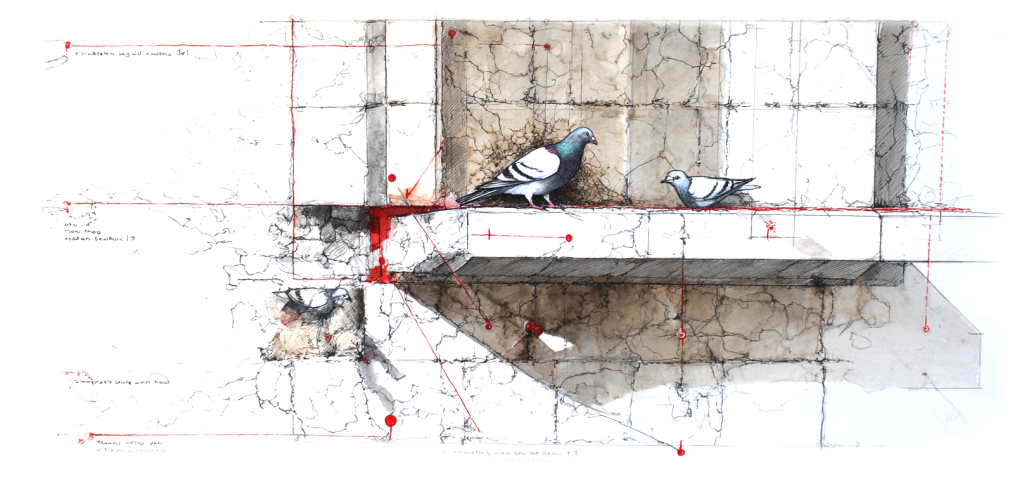
“A cracked facade isn’t always a failure — sometimes, it’s the last shelter a city offers.”
Why This Matters for the Future of Design
Birds aren’t romanticizing decay. They’re surviving in the gaps.
If we keep sealing every joint, flattening every ledge, and smoothing every surface, we lose more than architectural detail — we lose urban biodiversity. This isn’t about turning buildings into birdhouses. It’s about acknowledging that our mistakes and oversights have become essential systems for other species.
Birds and facade design don’t need to compete.
They can be aligned — but only if we pay attention.
Look Up. There’s More Living on Our Walls Than You Think.
So why do birds keep choosing broken facades? Because we designed the rest of the city without them in mind. A cracked vent or warped panel might feel like a flaw to us — but to a pigeon or a sparrow, it might be the last viable nesting site in a sealed city.
Next time you hear flapping outside your window, consider this:
Design is still happening — even in the parts we forget.
Ready to Charge What You’re Worth?


