

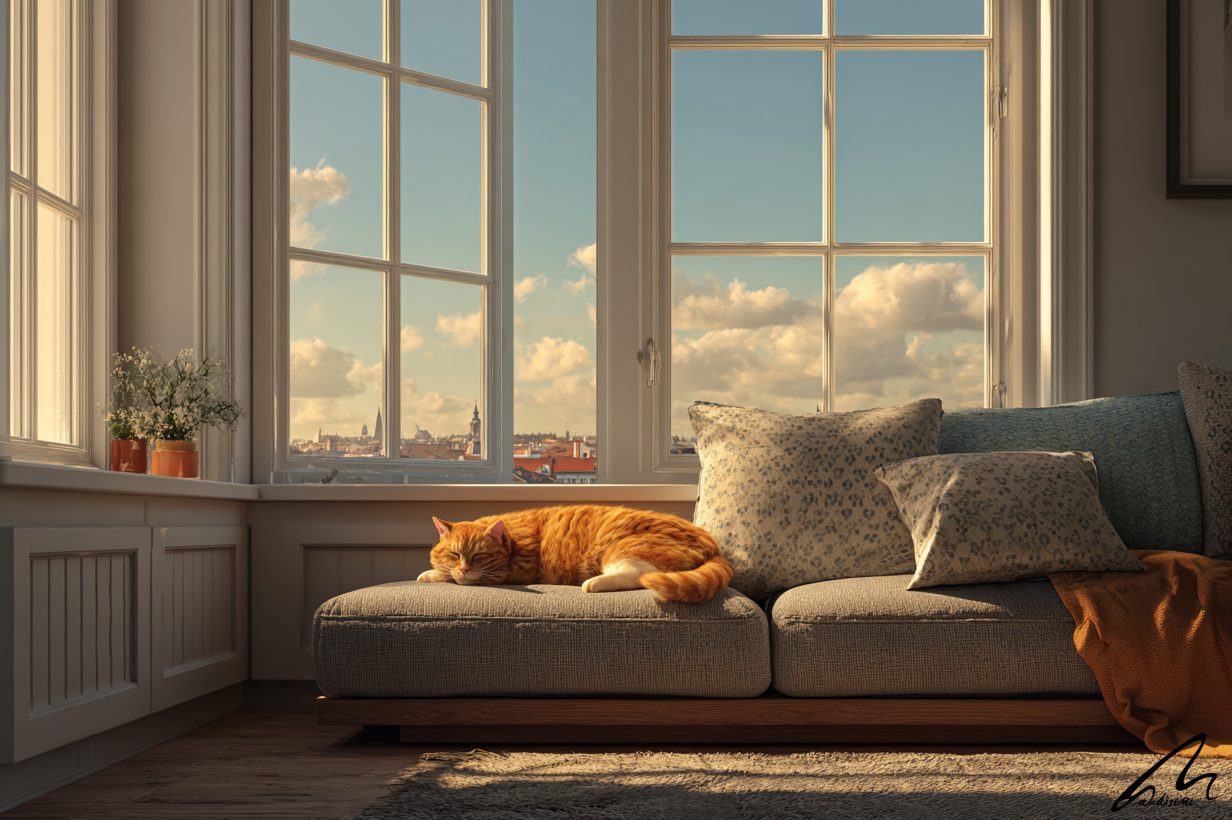
Shared comfort
Pet-Friendly Design
More comfort for theme | More comfort for you
Designing for pets isn’t just about them. It creates human spaces that breathe, adapt, and feel alive every day.
When we start designing for pets, something surprising happens: our homes become better for us too. Cats find sunny ledges, dogs stretch out on cool tiles, and birds perch where the air feels just right. Unlike us, they don’t follow trends — they follow comfort. That’s why designing for pets isn’t only about keeping animals happy; it’s about creating human spaces that adapt, breathe, and feel alive.
And if you’re curious about how to make your home feel right beyond just looks, explore our post How to Make Your Home Feel Right (Not Just Look Good)
Why Pets Are Natural Experts in Comfort
Pets respond instinctively to their environment. A cat won’t sit in the chair you bought if the windowsill has more sunlight. A dog won’t sprawl on your expensive rug if the tiled floor feels cooler. Birds shift perches depending on air circulation.
These choices aren’t random — they’re critiques of our design. Pets point out what works and what doesn’t. In this way, designing for pets doubles as designing for human well-being.
Cats and Their Sunlit Wisdom
Cats are excellent teachers when it comes to microclimates:
- Height matters. Cats feel safer up high, and humans enjoy layered spaces too — from cozy reading nooks to bookshelves that double as perches.
- Sun cycles. Cats chase sunlight throughout the day. Designing around natural light makes homes more energizing for everyone.
- Textures. Cats love variety: smooth tiles, soft blankets, scratchable surfaces. Humans respond positively to the same tactile diversity.
Dogs and the Comfort of Belonging
Dogs show us the importance of safety and flexibility in a home:
- Temperature zones. Dogs naturally move between warm rugs in winter and cool floors in summer. We can mirror this by rotating textiles and seasonal furniture.
- Retreat corners. Many dogs prefer semi-enclosed spaces. Humans need “retreat zones” too — a corner chair, a nook for quiet, a balance to open-plan living.
- Movement paths. Dogs pace, follow, and roam. Open circulation in floor plans helps both dogs and humans feel more at ease.
Birds and the Forgotten Element: Air
Birds remind us to design with air in mind:
- Airflow. Birds thrive where fresh air circulates. Designing cross-ventilation improves comfort for people too.
- Perches. Birds use different perches for different moods. Humans benefit from similar options: a standing desk, a low armchair, a window seat.
- Seasonal shifts. Bird owners often move cages depending on light and drafts — a subtle reminder that no layout is forever.
The Shared Lessons
Across species, the same themes emerge:
- Flexibility matters. Comfort shifts with seasons and time of day.
- Zones create choice. Ledges, corners, heights, and open paths all serve unique needs.
- Senses drive design. Light, airflow, texture, and temperature shape how both pets and humans experience space.
Practical Tips for Pet-Friendly Design
If you live with pets, you’re already in a multi-species household. Here’s how to make design work better for everyone:
- Rotate cozy spots by season. Offer cool resting places in summer and sunny, warm areas in winter.
- Mix textures. Combine smooth floors, soft textiles, and tactile furniture to enrich comfort.
- Design vertical + horizontal layers. Cats and birds use height; dogs and humans often use ground zones. A mix keeps spaces lively.
- Protect circulation paths. Avoid cluttered layouts — it helps pets move naturally and makes human spaces flow better.
- Think microclimates. Notice where light, air, and warmth gather. Pets already do.
Why Humans Benefit Too
When we design for pets, our homes become:
- More adaptable — because we account for change.
- More sensory-rich — because we focus on light, air, and texture.
- More human-friendly — because comfort and flexibility become the priority.
In short, designing for pets helps us rediscover what truly makes a space feel good.
The Future of Multi-Species Homes
More people live with pets today than ever before, and designers are beginning to respond. From pet-friendly flooring to integrated climbing walls to bird-safe balconies, the idea of multi-species design is moving mainstream.
The future of home design won’t be about humans alone. It will be about coexistence — and that makes life better for everyone.
Conclusion: Pets as Everyday Designers
The next time your dog leaves the rug for the tiles, or your cat abandons the sofa for the windowsill, pay attention. They’re showing you how space really works.
By designing with pets in mind, we create homes that are not only pet-friendly, but also more human-friendly, more flexible, and more alive.
Where is your pet’s favorite spot at home — and how has it changed over the seasons? Share it. You may realize your pets have been teaching you about designing for pets all along.
Ready to Charge What You’re Worth?

Comment (1):
Vallie
Thank you for this! It answered all my questions in one place.