

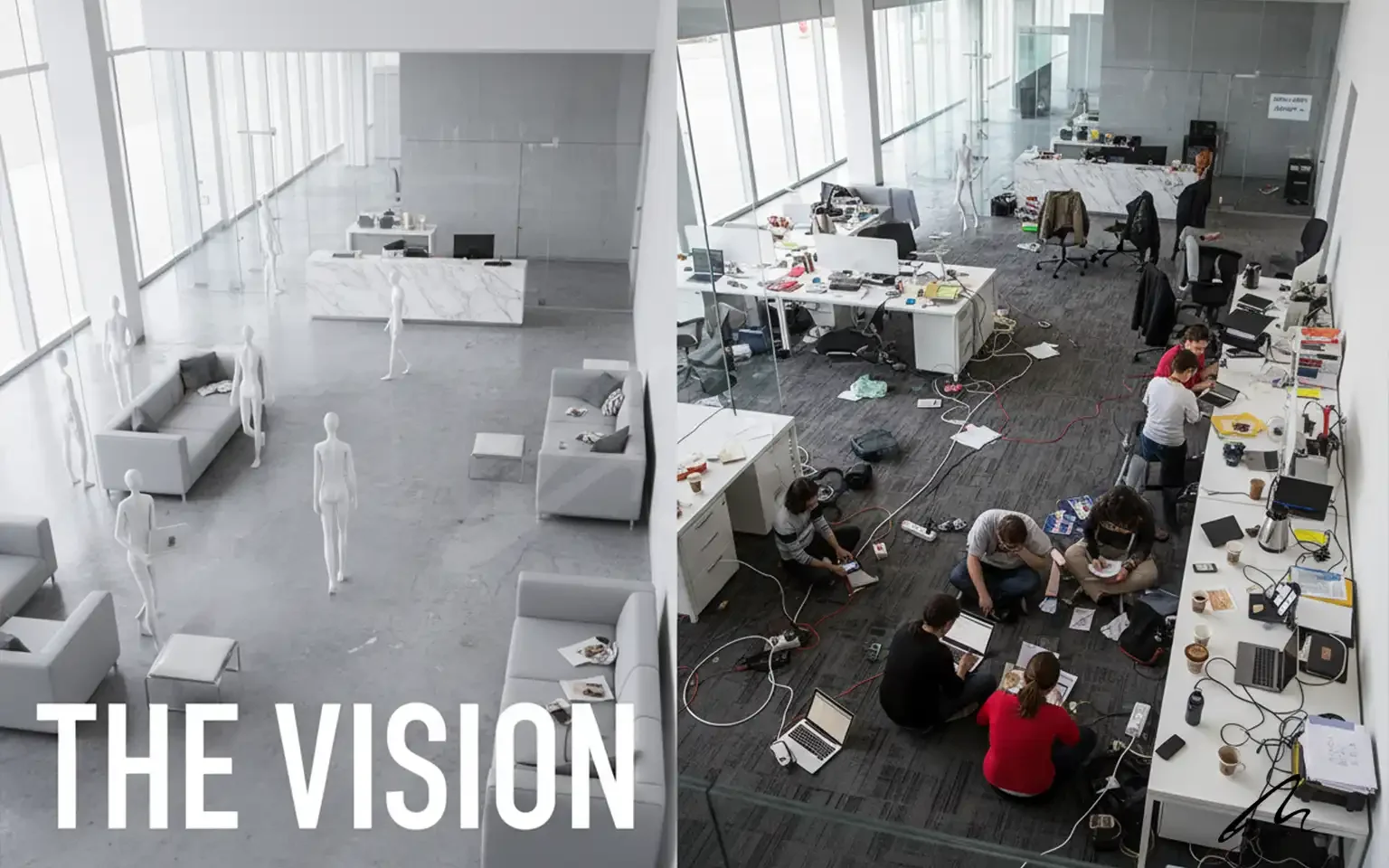
The lobby smells of stale coffee and industrial carpet cleaner. You watch a courier struggle with the heavy glass door you insisted on—the one without an automatic opener because it ruined the minimalist profile. He kicks it open, leaving a permanent black scuff mark on the frame. Inside, the fifty-thousand-dollar interaction zone is silent. No one is interacting. Instead, every single employee is squeezed into the acoustic pods you tried to cut from the budget during the value engineering phase. This is the moment you realize the design intent failed the human reality. Consequently, you have two choices: you can walk away and hope the client doesn’t notice, or you can turn this observation into a post-occupancy evaluation revenue stream.
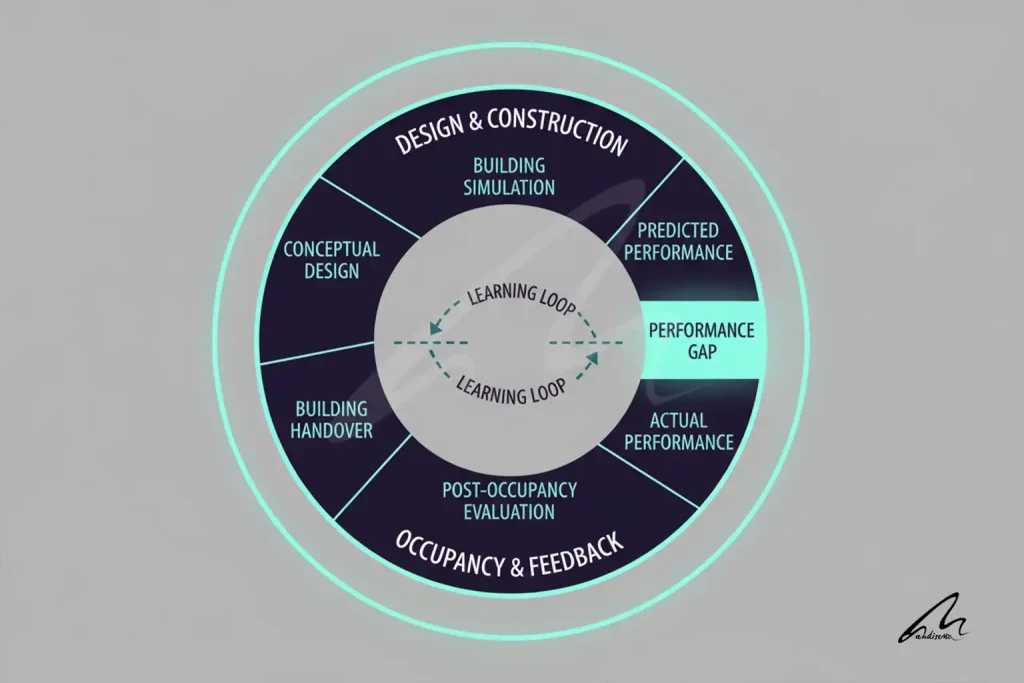
Most practices treat the end of a project like a crime scene. They hand over the keys and run, fearing that any further contact will trigger a latent defects claim. This is a strategic error. By walking away, you abandon the only data set that can prove your value to the next client. You leave the ‘performance gap’ unmeasured and unmonitored. This gap is the difference between how a building was modeled and how it actually functions. Measuring this gap is your most powerful sales tool.
TL;DR The Executive Summary +
- Architects ignore completed buildings, missing out on the primary source of performance data and client trust.
- The 'Performance Gap' shows that buildings often use 2.5 times more energy than predicted and fail user comfort metrics.
- A systematic evaluation process turns design failures into consulting fees and proves ROI to investors.
- By measuring actual outcomes, you transition from a commodity service provider to an essential performance partner.
Using post-occupancy evaluation revenue to secure your practice
A post-occupancy evaluation (POE) is not a polite follow-up call. It is a rigorous, evidence-based analysis of a building’s performance in terms of energy, environment, and occupant behavior. When you integrate this into your business model, you stop selling drawings. You start selling outcomes. This shift is critical because clients no longer want to buy ‘square meters.’ They want to buy productivity, retention, and decarbonization. If you cannot prove your last building delivered these, you are just another architect with a nice portfolio. Therefore, you must quantify the invisible.
Bordass et al., 2001 – Building Research & Information famously highlighted that buildings rarely perform as well as their design intent suggests. Their work on the ‘PROBE’ studies revealed that energy consumption in ‘green’ buildings is often double the design estimate. This is not necessarily a failure of the architect; it is a failure of the feedback loop. When you approach a client six months after handover to conduct a POE, you are not admitting fault. You are performing a professional audit. Data-driven honesty builds more trust than defensive silence. This trust is what leads to the next three commissions.
The economics of the feedback loop
How does a POE lead to more work? It happens through three distinct channels. First, it identifies ‘quick wins’ for the current client. If the sensors are miscalibrated or the lighting is too bright, you fix it. This demonstrates immediate ROI. Second, it provides the case study for your next pitch. Instead of saying ‘we design sustainable offices,’ you can say ‘our last office project achieved a 15% increase in self-reported occupant productivity.’ The latter wins the contract. Third, it allows you to charge for consulting services that sit outside the standard design fee. You are now an urban performance consultant.
This transition is essential because the traditional architect fee proposal metrics are being squeezed by automation and competition. You cannot compete on the price of a floor plan. You can, however, compete on the certainty of an outcome. When you can show an investor that your design interventions directly correlate with lower tenant churn, the fee becomes irrelevant. The value is too high to ignore. Performance data turns a cost center into a profit engine.
Dismantling the fear of failure
The primary reason architects avoid POEs is the fear of being blamed for building underperformance. This fear is misplaced. A building is a complex system of hardware and software. If a mechanical system is underperforming, the POE allows you to hold the contractor or the manufacturer accountable using data rather than anecdotes. It shifts the conversation from ‘I think this feels cold’ to ‘The data shows the air handling unit is short-cycling.’ Consequently, you become the client’s advocate rather than their target.
To build a robust performance brief architecture, you must start at the beginning of the project, not the end. You must define what success looks like in measurable terms. If the goal is ‘reduced sick days,’ how will you measure that? If the goal is ‘maximum footfall,’ where are the sensors? By setting these benchmarks early, the POE at the end becomes a natural conclusion rather than a surprise inspection. It completes the loop. It proves you did what you said you would do.
Moving from designer to performance partner
Your next three projects will not come from a glossy magazine feature. They will come from the client who sees you as a partner in their business success. Consider the difference in a meeting with a developer. Architect A shows a series of beautiful renders. Architect B (you) shows a post-occupancy evaluation projects report from a similar site. You show how you identified a heat-island effect in the courtyard and corrected it, saving the client $20,000 in annual cooling costs.
Which architect gets the job? The one who understands the economics of space. The one who treats the building as a living laboratory. City-scale analysis starts with the individual room. If you cannot get the room right, you cannot get the city right. Therefore, the POE is the foundation of all urban performance consulting. It is the evidence that your theory works in the wild. Stop designing for the photo shoot and start measuring for the performance report.
In the end, a building that fails its occupants is a structural failure, even if the walls stay up. We have spent too long focusing on the envelope and not enough on the life inside it. This is why Mahdiseño exists. We translate these field measurements into a language that planners and investors can act on. We turn the messy reality of a scuffed lobby door into a roadmap for a better, more profitable building. The data is already there. You just have to go back and collect it.
You Might Be Wondering
Honest answers to real objections
Q1Won't a post-occupancy evaluation just give the client ammunition to sue me for design flaws?No, it acts as a defensive shield by documenting that failures often occur during the operational phase rather than the design phase.+
Q2How do I convince a client to pay for a POE after the project is already finished?Position it as an 'Operational Optimization Audit' that delivers direct ROI through energy savings and tenant retention.+
Q3I'm a small firm; do I really have the resources to conduct scientific-grade research?Yes, you can start with low-cost digital surveys and data loggers to gather high-impact evidence.+
Ready to Charge What You’re Worth?