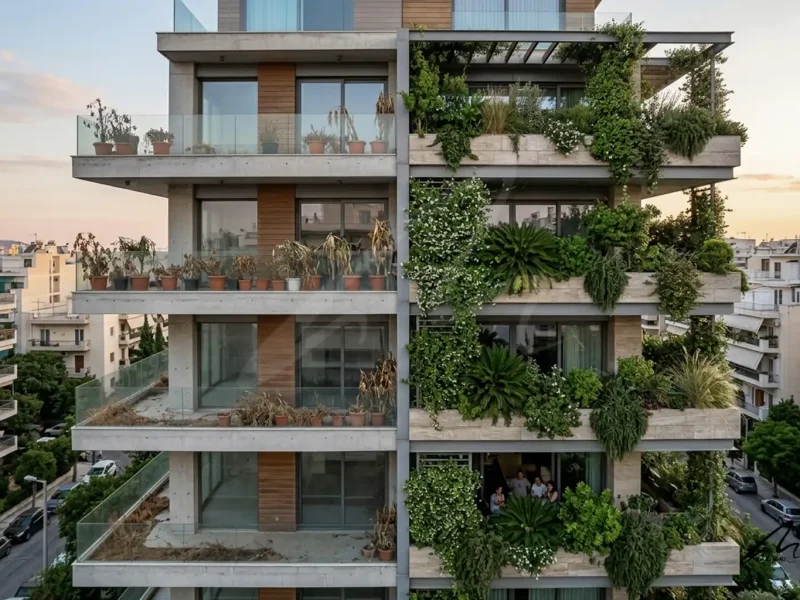

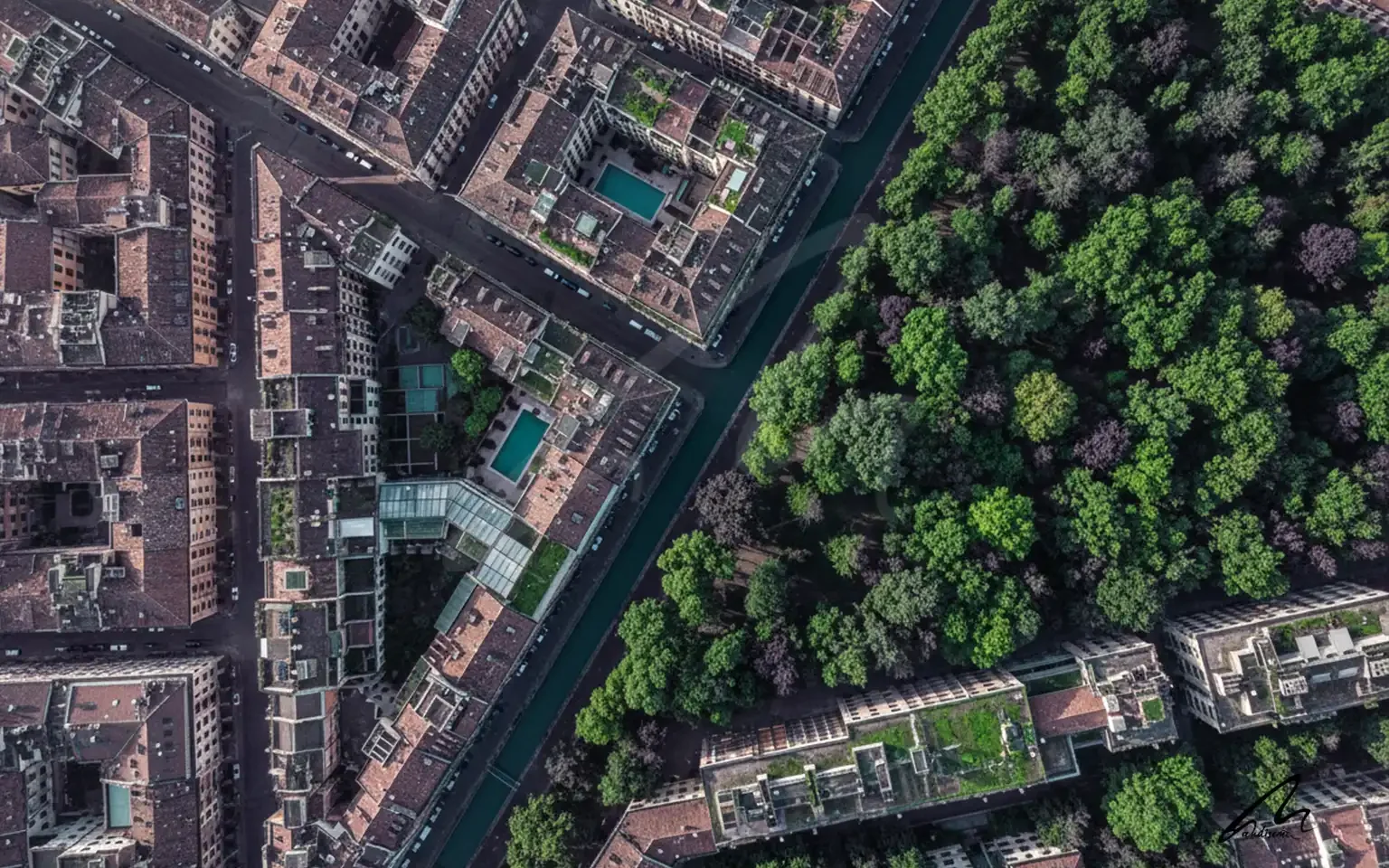
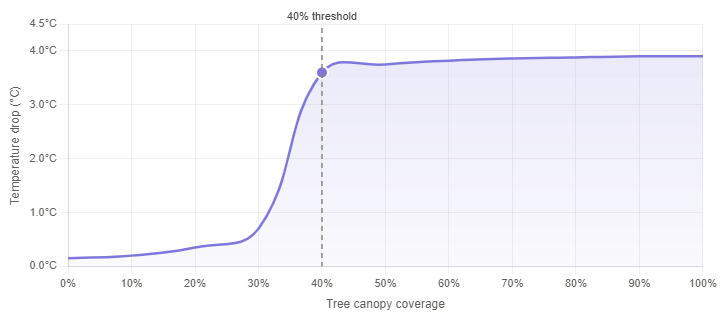
Urban trees economic value is not a nebulous aesthetic preference. In their 2019 study published in the Proceedings of the National Academy of Sciences (PNAS), Carly Ziter and her colleagues demonstrated that urban cooling only becomes significant when tree canopy cover exceeds 40%. Ziter et al., 2019 — PNAS. This research dismantles the common industry misreading that every tree planted provides a marginal, linear cooling benefit. Consequently, if your development or district plan only achieves 15% or 20% canopy cover, you are spending capital on landscaping without capturing the climatic performance that drives value. You are buying a decoration when you should be building an engine.
TL;DR The Executive Summary +
- Planners often assume urban trees provide linear cooling benefits, but the data suggests a threshold effect.
- Research indicates that significant cooling only occurs once canopy cover exceeds 40% in a given area.
- We analyze the economic consequences of heat on labor productivity, energy demand, and healthcare costs.
- The result is a shift from 'planting trees' to 'engineering canopy density' for measurable ROI.
The 40% Threshold: Why Scattered Planting Fails
Most municipal tree targets are based on total count rather than density. This is a fundamental error in urban performance. The Ziter study utilized a network of sensors across Madison, Wisconsin, to show that below the 40% threshold, the cooling effect is negligible. The hard surfaces—asphalt, concrete, and roofing—absorb enough solar radiation to overpower the evapotranspiration of isolated trees. Therefore, a ‘million trees’ initiative that spreads saplings thinly across a city provides almost no relief from the Urban Heat Island (UHI) effect.
This means that to see a temperature drop of up to 3.6°C (6.5°F), you must cluster your assets. You must prioritize density over distribution. If you manage a portfolio of urban assets, this data should change how you allocate your landscape budget. You are not looking for a green ‘fuzz’ across your site. You are looking for deep, overlapping canopies that create a microclimate. This shift in strategy transforms landscaping from a line-item cost into a functional infrastructure investment.
Why Buildings Fail People Before They Fail Structurally
Converting Degrees Into Dollars
Why does a 3.6°C temperature drop matter to your bottom line? In the context of the city’s economy, heat is an invisible tax. High temperatures correlate directly with increased energy demand for cooling, which spikes operational costs for commercial tenants. Furthermore, extreme heat impacts cognitive function and labor productivity. Research consistently shows that as indoor and outdoor temperatures rise above the comfort zone, the rate of errors increases and output decreases.
Consequently, the presence of a 40% canopy cover acts as a subsidy for the local economy. It lowers the peak load on the electrical grid, reducing the risk of brownouts and the need for expensive infrastructure upgrades. The economic value is also found in public health. Lowering the ambient temperature reduces heat-related hospital admissions and respiratory issues exacerbated by high-heat ozone formation. For a developer, this translates into higher tenant retention and the ability to command premium rents in ‘cool’ districts.
Walkability Is Not a Lifestyle Choice. It’s a Financial Instrument.
The Real Cost of the ‘Green Mistake’
Developers keep making the same expensive green mistake: they treat trees as a planning requirement to be checked off. They plant single rows of trees along a sidewalk where the soil volume is insufficient and the canopy will never touch. This results in high mortality rates and zero thermal performance. The result is a wasted investment. To avoid this, you must treat the canopy as a structural component.
This requires a performance-based brief. Instead of specifying ’20 trees,’ specify ‘40% shade coverage at 10 years of maturity.’ This forces the design team to consider soil volume, species selection, and irrigation as critical path items for the project’s financial success. Therefore, the goal is not to have a green site; the goal is to have a performing site.
How to Write a Performance Brief Before You Design Anything
The Result: Trees as Financial Instruments
When you understand the 40% threshold, you stop seeing trees as plants and start seeing them as financial instruments. They mitigate the risk of extreme weather events, improve the psychological wellbeing of the workforce, and directly increase the value of the surrounding real estate. The 3.6°C problem is not just a climate issue; it is a management issue.
Urban performance consulting allows you to measure these outputs before you break ground. By using spatial design informed by peer-reviewed research, you can ensure your project reaches the necessary density to trigger these economic benefits. Don’t plant trees. Engineer a canopy.
You Might Be Wondering
Honest answers to real objections
Q1Don't trees take too much space that could be used for parking or building footprint?False trade-off.+
Q2How do you prove the 3.6°C cooling actually happened after the project is finished?Post-occupancy measurement.+
Q3Trees are expensive to maintain and often die in urban settings. Is it worth the risk?Engineering issue, not biological.+
Ready to Charge What You’re Worth?