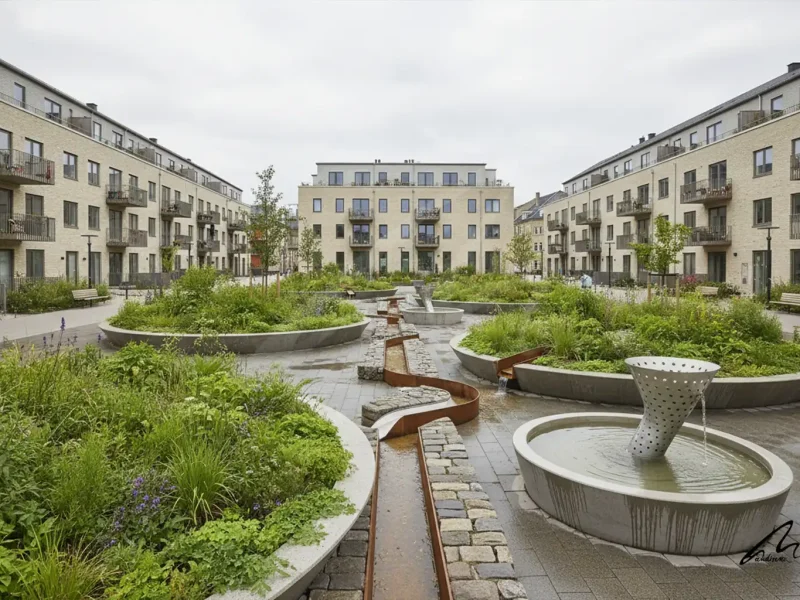



We’ve all walked into that room. It looks technically perfect—it’s beautifully lit, expensive, and carefully cleaned—yet it feels cold, uninviting, or draining. In fact, this emotional mismatch signals that the space is fundamentally broken.
The traditional approach to design focuses on objects (materials, forms, budgets). However, it often ignores relationships (how people interact with the space and each other). Ultimately, this object-centric thinking is the core reason most spaces fail. They fail to support human connection, well-being, and productivity.
Therefore, a truly successful space acts as a catalyst for connection, belonging, and focus. When a space fails, it violates one of Relational Design’s three foundational principles. Below, you’ll find our critique of the modern design mindset. We also provide actionable strategies to build genuinely connective spaces.
1. The Loss of the Perimeter: Why Most Spaces Fail to Define Belonging
In modern commercial and residential design, we often prioritize openness over definition. For instance, the prevailing trend of vast, open-plan areas aims to promote communication, but it frequently creates the opposite: anxiety. When a boundary blurs, the user loses their instinctual sense of protection and defined territory.
Consequently, the “Loss of the Perimeter” is a critical reason most spaces fail to foster connection. Humans are tribal; they need clearly defined areas, even subtle ones, to feel comfortable claiming a space and engaging with others. Ultimately, a space without a perimeter lacks ownership. This leads to distraction, transience, and emotional withdrawal.
Restoring the Perimeter: Designing for Belonging
- Implement “Soft Boundaries”: You don’t need walls; you need visual cues. Use subtle shifts in flooring material, area rugs, custom screens, or strategically placed furniture (like a back-facing sofa) to delineate conversational zones. These soft boundaries signal, “This is a space where a defined activity is taking place.”
- The Power of the Nook: Every successful building needs smaller, semi-private areas. These “nooks” or “snugs” (whether a window seat or a deep booth) provide the psychological safety necessary for true one-on-one conversation and focused work, thus dramatically improving connection quality.
To effectively move beyond simply aesthetics and focus on creating truly supportive spaces, we developed a tool to assess the psychological needs of the user. We invite you to take the Space Design Starter Kit (Free Quiz) to understand your own personal psychological drivers in design.


2. The Sensory Disconnect: Why Most Spaces Fail to Ground Us in Reality
Most contemporary interiors are acoustically dead, visually monotonous, and thermally static. Essentially, they are sealed, homogenized environments designed for easy cleaning, not for human experience. This is the second crucial reason most spaces fail.
We are fundamentally connected to our environment through our senses. However, when a space blocks natural stimuli—like the subtle changes in daylight, the fresh scent of wood, or the sound of rain—it forces us to expend energy to maintain focus. This sensory disconnect leads to fatigue, irritation, and a profound sense of isolation, even when people surround us.
The Sensory Solution: Grounding the User
- Biophilic Layering: Introduce elements that remind the user of the outside world. This goes beyond just adding a plant. Instead, it means using materials with genuine texture (rough-cut stone, raw wood), maximizing access to natural light, and using acoustic design to manage, but not eliminate, natural ambient sounds.
- Thermal Variation:
Allow for slight, natural temperature gradients. A uniformly controlled space feels clinical. Conversely, a cozy reading nook near a window (which may feel slightly cooler) or a workspace near a warm wood floor feels dynamic and alive, triggering engagement and connection to the present moment.
If you are looking for guidance on implementing these psychological principles in your projects, our specialized Consulting Services can help you shift your design process from cost-focused to value-focused. In this way, you ensure your spaces connect with human needs.

3. The Implied Rule Gap: Why Most Spaces Fail to Guide Behavior
The final and most subtle failure occurs when a space offers no visual cues on how it should be used. The designer has an intention, but the physical environment provides no clear, unspoken instruction. This Implied Rule Gap is the third reason why most spaces fail to facilitate connection.
For example, a traditional conference room with a huge table implies hierarchy and formality—the implied rule is “speak only when called upon.” A rigid, fluorescent-lit corridor implies a need for speed and silence—the implied rule is “do not stop.”
Clearly, these are environments of command, not connection. True connection requires environments of invitation and dialogue.
Closing the Rule Gap: Designing for Invitation
- Use Non-Hierarchical Furniture: In collaborative settings, swap the single, imposing rectangular table for flexible, modular pieces or a cluster of varied seating. This implies the rule: “Your voice is one of many; movement and rearrangement are encouraged.”
- Layered Lighting: Use lighting to guide attention and imply mood. Direct, localized light over a dining table implies: “Focus and engage with the people here.” Ambient, warm light in a lounge area implies: “Relax and linger.” In short, the lighting sets the unspoken rule for the level of connection expected.
To truly master this aspect of design, Therefore, it’s essential to study the psychological research behind proxemics, specifically the difference between Sociopetal and Sociofugal spaces, which clarifies how spatial arrangement either encourages or discourages human interaction.
Conclusion: Rebuilding Connection
When we understand that architecture is not just a container for life but an active participant in shaping human emotion and behavior, we move past the object-centric mindset. The solution to why most spaces fail lies in the principles of Relational Design: clear boundaries, sensory richness, and behavior cues. Therefore, by designing for the human relationship first, we ensure that our buildings become powerful assets that actively connect people to their work, their environment, and each other.
To help you audit your design process and ensure you are solving for the client’s biggest fears and psychological needs, we offer a communication guide. Beyond Style—The First Conversation (Free Tool) gives you the exact questions needed to uncover the emotional brief behind the architectural brief.
Ready to Charge What You’re Worth?