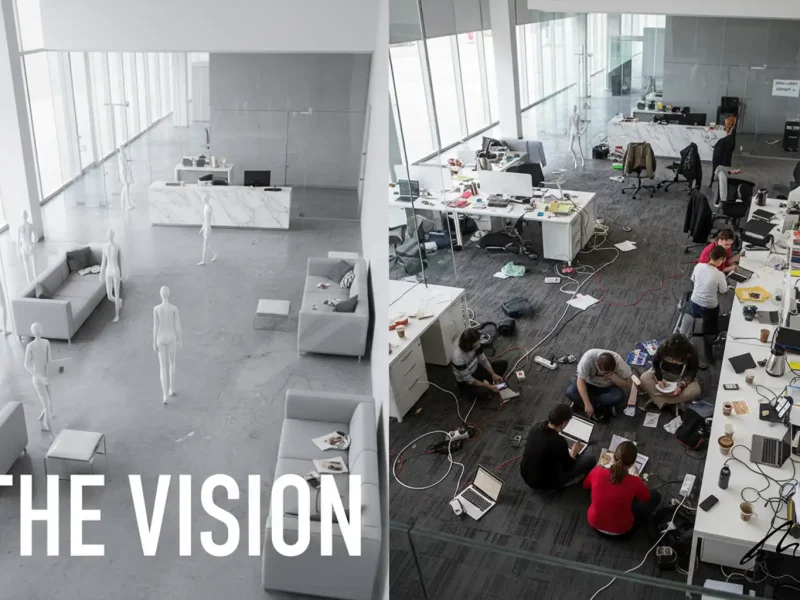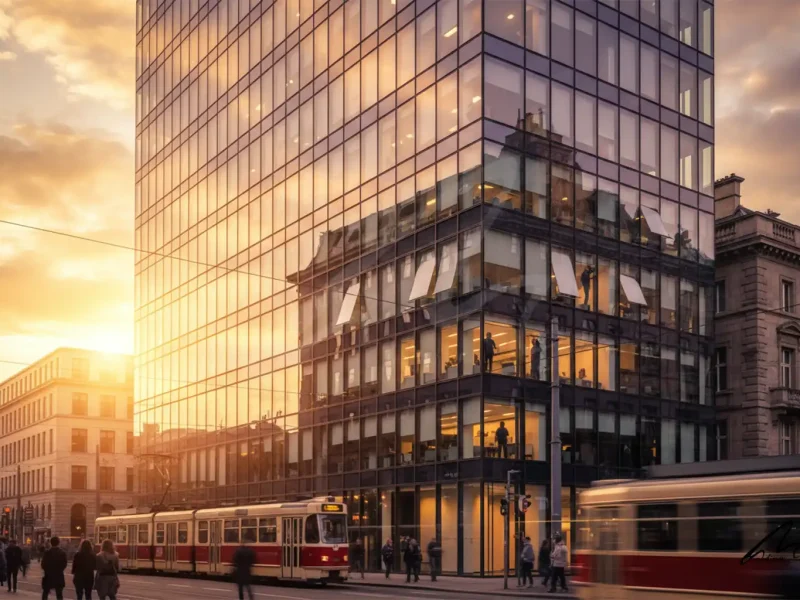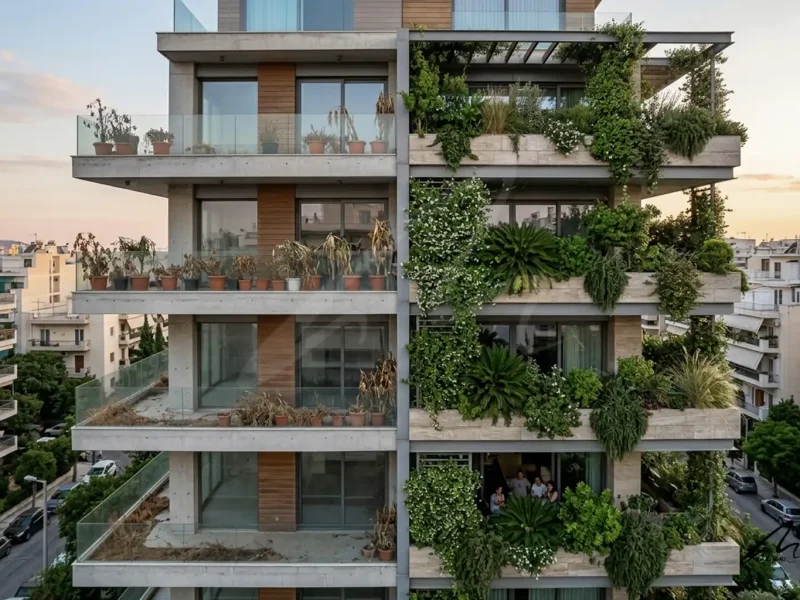

Biophilic design evidence suggests that your brain recognizes a fake environment faster than your eyes do. In 2009, Bjørn Grinde and Grete Grindal Patil published a meta-analysis in the International Journal of Environmental Research and Public Health confirming that human health depends on visual and non-visual contact with nature. They found that up to 10% of health-related absences can be attributed to buildings with no nature-derived features. Grinde, B., & Patil, G. G., 2009 — International Journal of Environmental Research and Public Health. Consequently, the common practice of placing a few plants in a sterile lobby is a failure of both design and logic. This approach assumes biophilia is a visual accessory. It is not. It is a neurological requirement. This article dismantles the decorative myth and focuses on the structural performance of space.
TL;DR The Executive Summary +
- The architectural industry treats biophilia as a decorative checklist rather than a physiological performance metric.
- Research identifies that up to 10% of employee absences are directly linked to nature-deprived office environments.
- High-performance design must prioritize fractal geometries, thermal variability, and dynamic light over superficial greenery.
- Implementing structural biophilia reduces cortisol levels and secures higher long-term property valuation.
The Brain Processes Fractals Faster Than Boxy Geometries
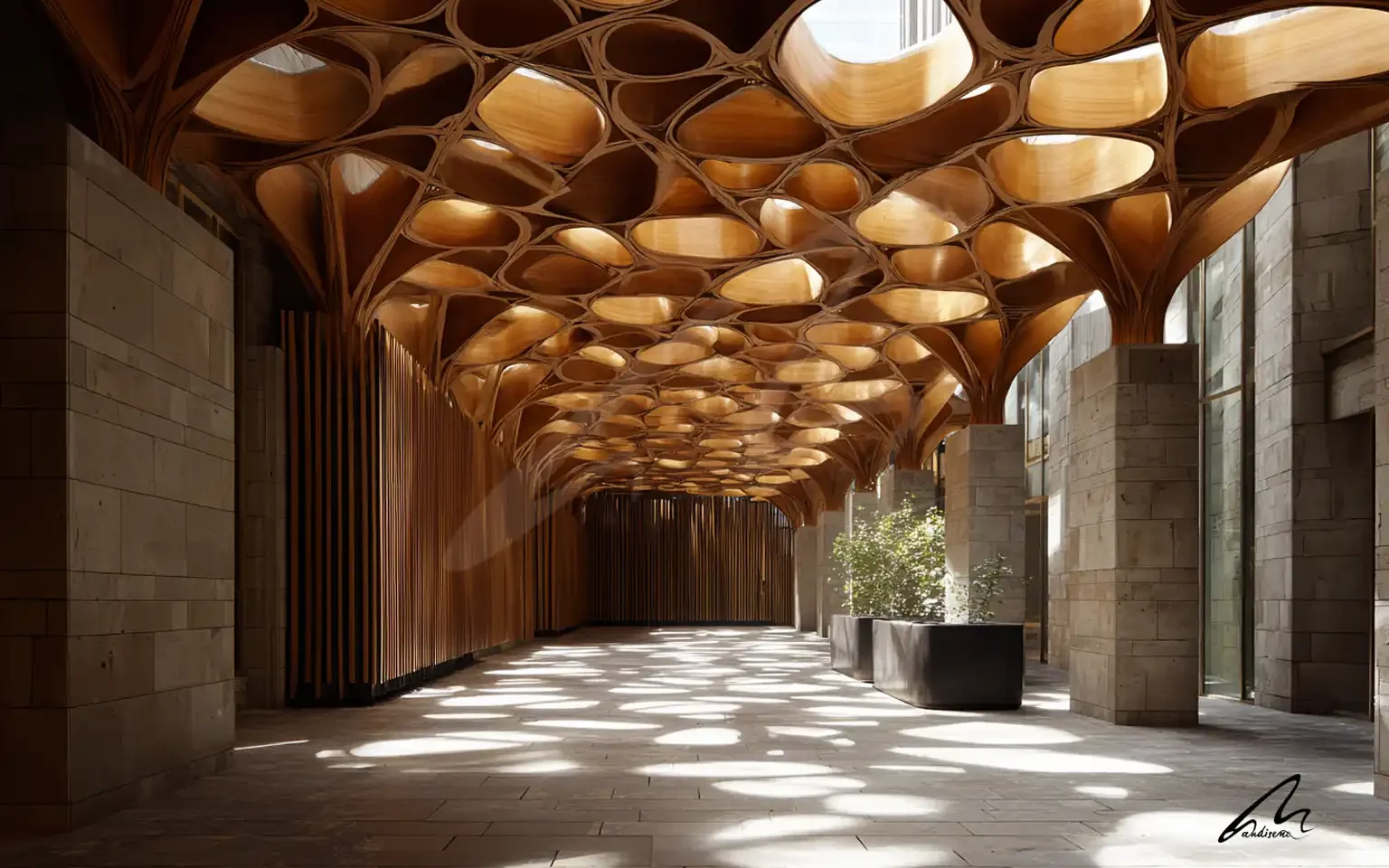
Nature is not composed of boxes. It is composed of fractals—patterns that repeat at different scales. Research by Yannick Joye in 2007 highlights that the human eye is tuned to process fractal dimensions between 1.3 and 1.5. When you force people to live and work in smooth, featureless boxes, their brains work harder to process the environment. Consequently, visual fatigue sets in. Therefore, you must integrate structural fractals into the floor plan and facade. This does not mean drawing leaves on the wall. It means designing geometries that provide the same mathematical complexity found in a tree canopy or a coastline. The result is a lower baseline stress level for every occupant. Most designers miss this because they prioritize aesthetics over computational geometry. When the geometry of a room matches biological expectations, cognitive load drops. This is a measurable performance gain.
Static Temperatures Lead to Cognitive Decline
Static environments are a modern pathology. Most HVAC systems aim for a constant, unchanging temperature. This is a mistake. Human biology evolved in environments with constant thermal and airflow variability. Biophilic design evidence shows that slight variations in air temperature and surface texture stimulate the somatosensory system. This keeps occupants alert. If you maintain a room at a perfect 22 degrees Celsius with zero air movement, you create a sensory vacuum. This means you are effectively designing for boredom. Consequently, high-performance spaces must incorporate non-rhythmic sensory stimuli, such as gentle air movement or varying light intensities. This mimics the ‘breeze and shadow’ effect of the outdoors. You are not just building a shelter; you are building a biological interface. For a deeper look at why this matters, see why buildings fail people before they fail structurally.
Why Structural Biophilia Outperforms Decorative Greenery
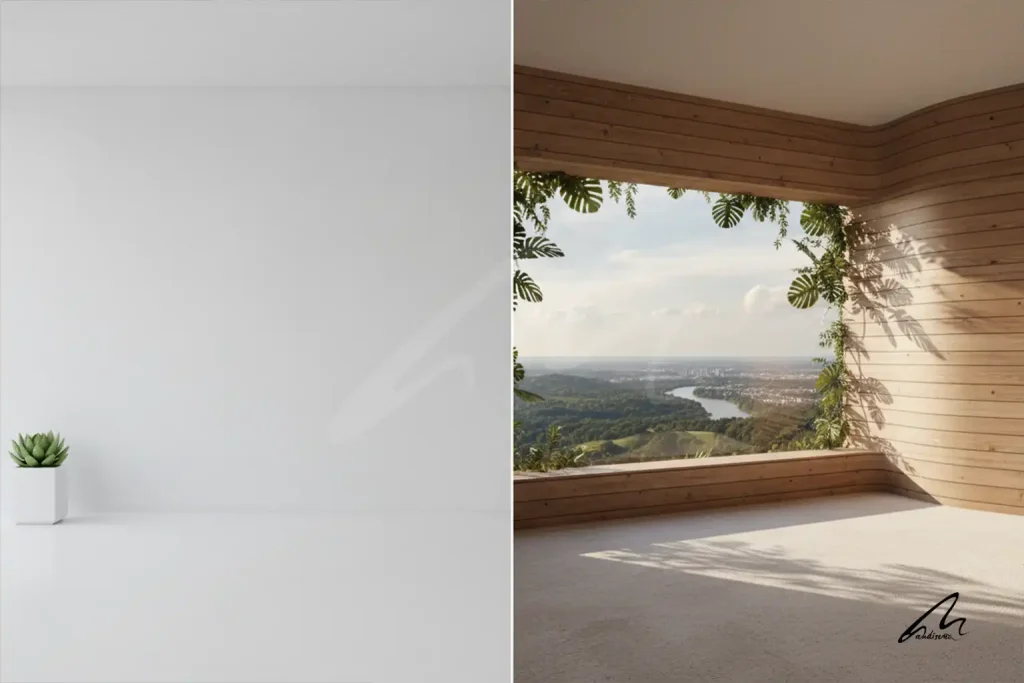
Plants are the weakest form of biophilia because they are often static and poorly maintained. True urban performance comes from the spatial configuration of the building itself. This includes ‘prospect and refuge’—the ability to see a long distance while having your back protected. This is a survival mechanism. Therefore, your interior design must provide protected zones with clear sightlines to the horizon or the street. This spatial configuration does more for mental health than a thousand fiddle-leaf figs. Consequently, the layout of the floor plate is more important than the landscaping budget. This is the difference between a building that looks good and one that performs. When you understand that human performance is the strongest argument for architecture, you realize that every design decision contributes to the economic performance of the asset.
The Economics of Neurological Comfort
Why does this matter to an investor? Because buildings that ignore biology lose value. If an office layout induces cognitive fatigue, the tenant loses money through lost productivity. Consequently, the landlord loses the tenant. Designing with deep biophilic principles—not just plants—is a risk mitigation strategy. It ensures the building remains a productive asset. Biophilic design evidence proves that people stay longer and pay more for spaces that satisfy their evolutionary needs. Therefore, you must stop treating these features as ‘nice-to-haves.’ They are the financial instruments of the 21st-century city. You can read more about how walkability functions as a financial instrument to see how this principle scales from the room to the neighborhood. The result is a city that sustains both the body and the balance sheet.
Conclusion: Structural Not Superficial
Biophilia is not a style. It is an evidence-based method for improving human performance. If your design starts with a box and ends with a plant, you have failed the brief. You must start with the geometry, the light, and the air. Consequently, the architecture itself becomes the nature. This requires a shift from decorative thinking to performance-based consulting. The data is clear: our brains require complexity, variability, and spatial safety. Therefore, the goal is not to bring nature into the building, but to make the building function as nature. This is how we build cities that actually work.
You Might Be Wondering
Honest answers to real objections
Q1Isn't biophilic design just an expensive way to say we want more windows?No, biophilic design is a structural performance methodology, not a window-count exercise.+
Q2Can artificial systems truly replicate the benefits of nature?Yes, if they replicate the mathematical complexity and dynamic nature of natural systems.+
Q3Does this only work for office spaces?No, it is a universal biological requirement for all building typologies.+
Ready to Charge What You’re Worth?