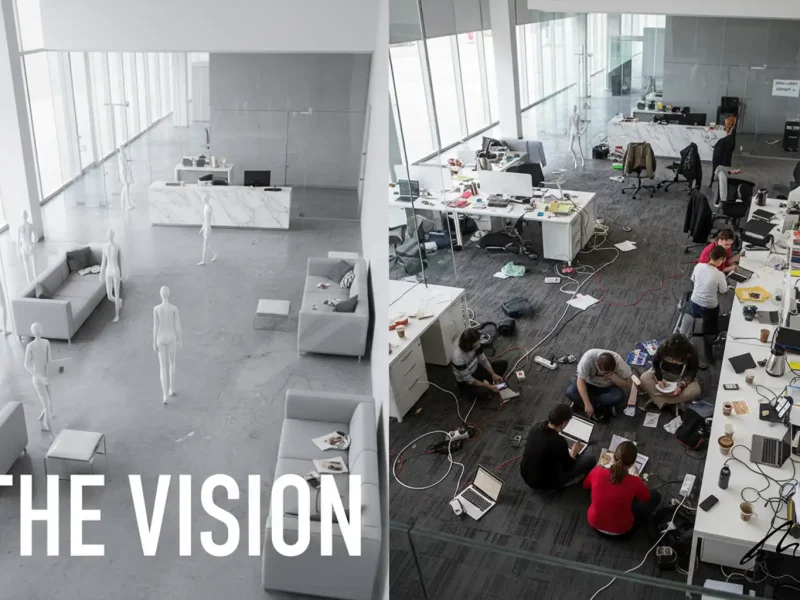

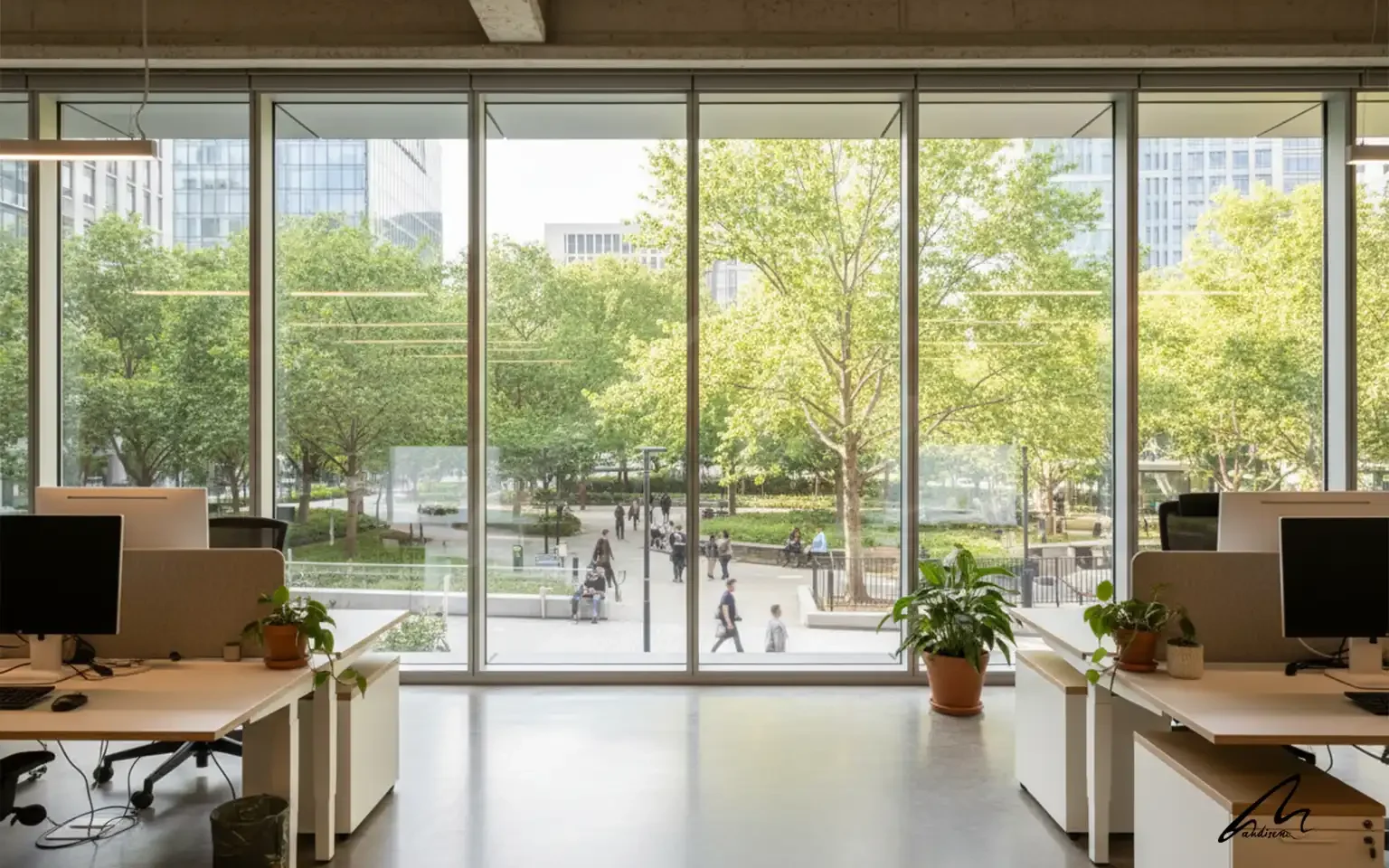
You are standing in a glazed atrium in central London, looking at a digital screen that displays the building’s real-time energy savings. The numbers are impressive. The carbon footprint is lower than any neighboring block. Yet, when you look around, the space is empty. The few people present look fatigued, huddled near the few spots with actual daylight. This is the visual proof of a systemic failure in how we value buildings. We have spent a decade optimizing for a gas—carbon—while ignoring the biological organism the building was actually meant to serve.
Carbon metrics are abstract. They exist in spreadsheets, offset markets, and policy whitepapers. Consequently, they often fail to move the needle during high-stakes investment committee meetings. To an investor, carbon is a compliance cost. It is a defensive play. Therefore, the argument for sustainable design is frequently treated as a charitable contribution to the planet rather than a core business strategy. This means the carbon argument is losing its edge because it lacks a direct, immediate feedback loop for the people paying the bills.
TL;DR The Executive Summary +
- Developers and investors are increasingly fatigued by abstract carbon-reduction mandates that offer no immediate tangible return.
- Cognitive function scores drop by 15% for every 400ppm increase in CO2, turning air quality into a direct financial metric.
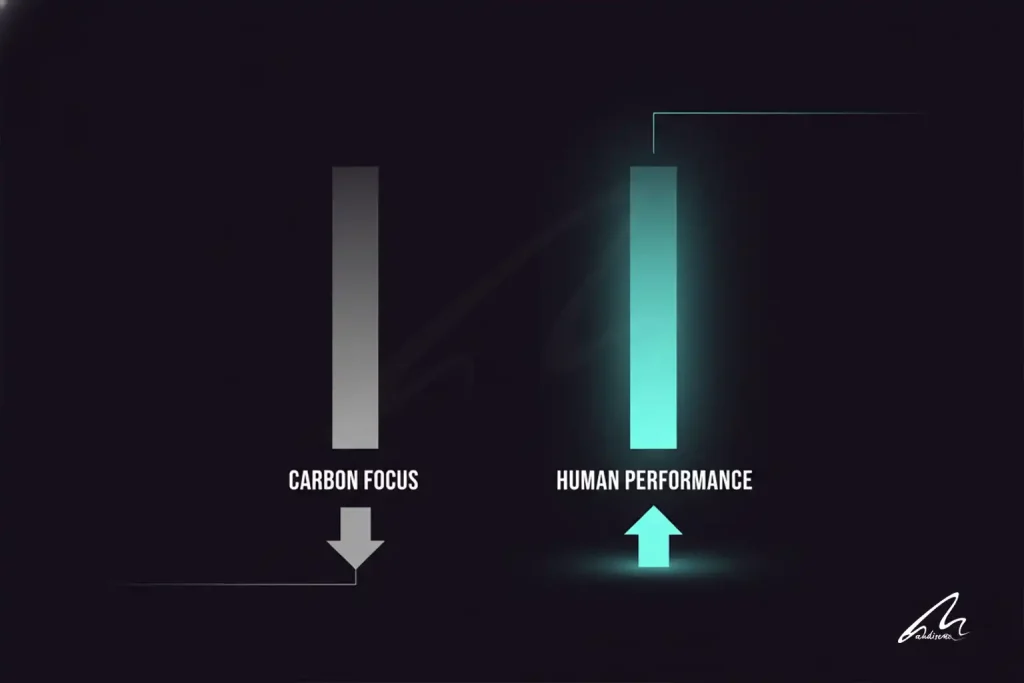
- We shift the focus from 'less harm' (carbon) to 'more value' (human performance) using spatial analysis and physiological data.
- The result is a more persuasive investment case that prioritizes health, productivity, and long-term asset resilience.
The Shift to Human Performance
You must change the conversation. The human argument architecture relies on the physiological and psychological reality of the occupants. When you talk about human performance, you are talking about the economics of biology. You are not asking a client to save the polar bears; you are showing them how to increase the cognitive output of their workforce or the recovery rate of their patients.
This is not a theoretical shift. It is a data-driven one. Research from Harvard’s T.H. Chan School of Public Health demonstrated that people working in high-performing, ‘green+’ buildings saw cognitive function scores 101% higher than those in conventional buildings [Allen et al., 2016 – Environmental Health Perspectives]. This is the ‘human argument’ in its purest form. If you can double the decision-making ability of an executive team by increasing ventilation rates and optimizing light, the building ceases to be a cost center. It becomes a tool for profit. Consequently, the performance brief architecture becomes the most important document in the project.
Read more about the performance brief
Carbon is a Metric, Health is a Value
When you lead with carbon, you lead with a negative—less waste, less emissions, less impact. Humans do not respond well to negatives. When you lead with human performance, you lead with an additive. You are offering more focus, better sleep, and reduced stress. This is why the human argument is winning. It transforms a building from a shell that houses people into a system that optimizes them.
Consider the financial reality of a typical corporation. Staff costs—salaries and benefits—usually account for about 90% of business operating costs. Energy costs represent perhaps 1%. If you save 50% on energy, you have impacted 0.5% of the budget. However, if you improve human productivity by just 10% through better spatial design and environmental control, you have impacted 9% of the total budget. The math is undeniable. Therefore, the result is that investors listen to biology far more intently than they listen to atmospheric chemistry.
This realization changes how you approach the design process. Instead of asking ‘how do we reduce the window-to-wall ratio to meet energy codes?’, you ask ‘how do we maximize circadian rhythm entrainment while maintaining thermal comfort?’. One is a box-ticking exercise. The other is a value-creation strategy. This shift is the foundation of the carbon human argument architecture.
The Architecture of Evidence
To win this argument, you cannot rely on intuition. You need field measurements. You need to prove that the ‘optimized’ design actually delivers the promised human outcomes. This is where most practices fail. They design for a ‘feeling’ and hope for the best. We do the opposite. We measure the light levels at the eye, not just on the desk. We analyze the acoustic decay in a room to ensure speech intelligibility doesn’t degrade focus.
This means you are no longer selling an aesthetic. You are selling a result. Consequently, the post-occupancy evaluation becomes the most valuable tool in your kit. It provides the evidence that your design interventions actually worked. It closes the loop. Without this data, your claims of ‘wellness’ are just marketing. With it, they are a financial guarantee.
Why we need post-occupancy evaluation
Redefining ROI in Urban Performance
The market is currently undergoing a flight to quality. This does not mean a flight to shiny facades. It means a flight to buildings that actually perform for their tenants. In an era of hybrid work, the office must be better than the home. If the air is stale and the lighting is harsh, people will stay away. This results in empty assets and stranded capital.
Therefore, the human argument is not just about health; it is about risk mitigation. A building that makes people feel better is a building that stays leased. This is the urban performance reality that planners and developers are finally starting to grasp. The goal is to move past the ‘green mistake’ of focusing solely on energy efficiency at the expense of human comfort.
Avoiding the developer’s green mistake
You have a choice. You can keep pushing carbon metrics that feel like a tax on your client’s ambition. Or you can start building the human argument. One leads to compromise. The other leads to investment. The choice is yours. Use the data. Focus on the occupant. Win the argument.
You Might Be Wondering
Honest answers to real objections
Q1Doesn't focusing on human comfort inevitably increase carbon emissions through more ventilation?No, human performance and low carbon are not mutually exclusive; they require better engineering, not more energy.+
Q2Is the human argument only relevant for high-end office buildings?The human argument is universal because human biology is universal across all building types.+
Q3How do you quantify 'productivity' or 'wellness' for an investor?We quantify value by linking physical environmental data to established biological and economic performance benchmarks.+
Ready to Charge What You’re Worth?