
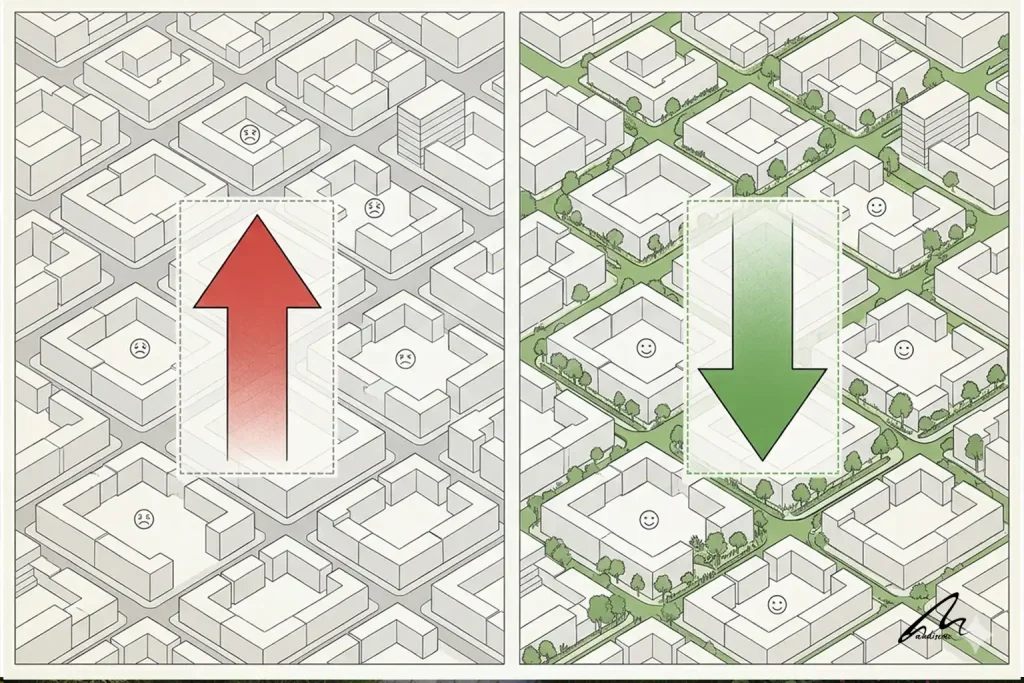
You treat urban vegetation as an amenity. You view it as a ‘nice-to-have’ feature that developers cut when budgets tighten. The data suggests this is a catastrophic financial and social error. Children raised in environments with the lowest levels of green space have a 55% higher risk of developing psychiatric disorders compared to those raised near the highest levels. This is the finding of Kristine Engemann et al. (2019) in their study ‘Residential green space in childhood is associated with lower risk of psychiatric disorders from adolescence into adulthood,’ published in PNAS Engemann et al., 2019 — PNAS.
This study is not about ‘spending time’ in nature. It is not about weekend trips to a national park. It measures cumulative exposure near the home from birth to age 10. Consequently, the psychiatric risk is baked into the very fabric of the streets you design and the assets you fund. If your project lacks integrated greening, you are effectively designing a mental health liability.
TL;DR The Executive Summary +
- The absence of urban green space is a primary predictor of long-term mental health pathologies, comparable to socio-economic status.
- A 2019 study of 943,027 people found that low green space exposure in childhood increases psychiatric risk by up to 55%.
- Residential greenness is measured through satellite imagery and longitudinal health data to quantify city-wide risk profiles.
- Urban planning must shift from aesthetic landscaping to high-density greening as mandatory preventative healthcare infrastructure.
The Real Driver of Green Space Psychiatric Risk
Dismantle the common misreading that this is simply a proxy for wealth. The Engemann study is significant because it adjusted for socio-economic status, parental age, and family history. The correlation remained robust. Therefore, green space is an independent variable in human performance. It is as fundamental to urban health as clean water or sewage systems. When you ignore this, you aren’t just losing ‘well-being’; you are increasing the long-term burden on the city’s healthcare infrastructure and reducing the productivity of its future workforce.
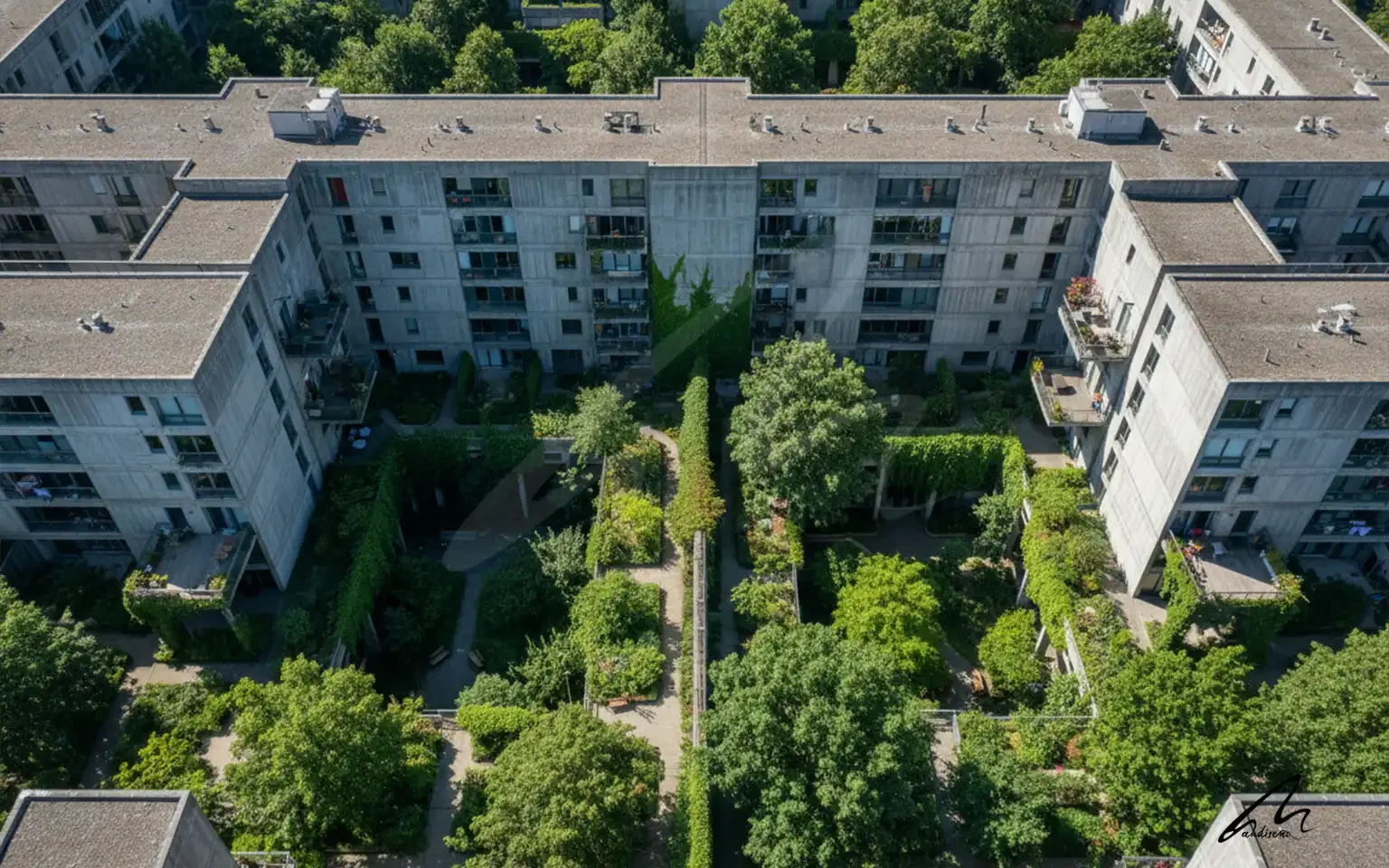
You must stop viewing parks as isolated destinations. The brain does not wait for a scheduled visit to the park to process the environment. It reacts to the daily visual and auditory presence of biological life. This means that a series of high-quality, high-density green corridors is more effective than one massive park accessible only by car. We call this integrated performance. It is the difference between a building that looks good and one that performs.
The Difference Between a Building That Looks Good and One That Performs
Why Developers Get the ROI Wrong
Most developers see the cost of planting and maintaining trees as a drain on the bottom line. This happens because they fail to account for the appreciation of human capital. High-performance green space increases the dwell time in retail districts, reduces the heat island effect that drives cooling costs, and—most importantly—creates a permanent premium on residential property. Investors are increasingly looking at health-based metrics because they represent the long-term stability of a neighborhood.
If you want to justify the cost of greening, you must change the language of your proposal. Don’t talk about ‘nature.’ Talk about the mitigation of psychiatric risk and the resulting stabilization of property value. Walkability and greening are not lifestyle choices; they are financial instruments that protect against urban decay.
Walkability Is Not a Lifestyle Choice. It’s a Financial Instrument.
Turning Data Into a Performance Brief
To act on this research, you need more than a planting plan. You need a performance brief. This document translates clinical research into specific spatial requirements. For example, if the goal is to reduce green space psychiatric risk, the brief must specify the Normalized Difference Vegetation Index (NDVI) targets for every residential window in the project. This is a measurable metric. It is verifiable. It can be held to account during the post-occupancy evaluation.
Consequently, the result is a project that is resilient to market shifts. A building that supports the cognitive health of its occupants is a building that remains occupied. This is how you build an evidence-based practice. You move from intuition to measurement. You stop guessing what people want and start delivering what they need to function.
How to Write a Performance Brief Before You Design Anything
The Scale of the Intervention
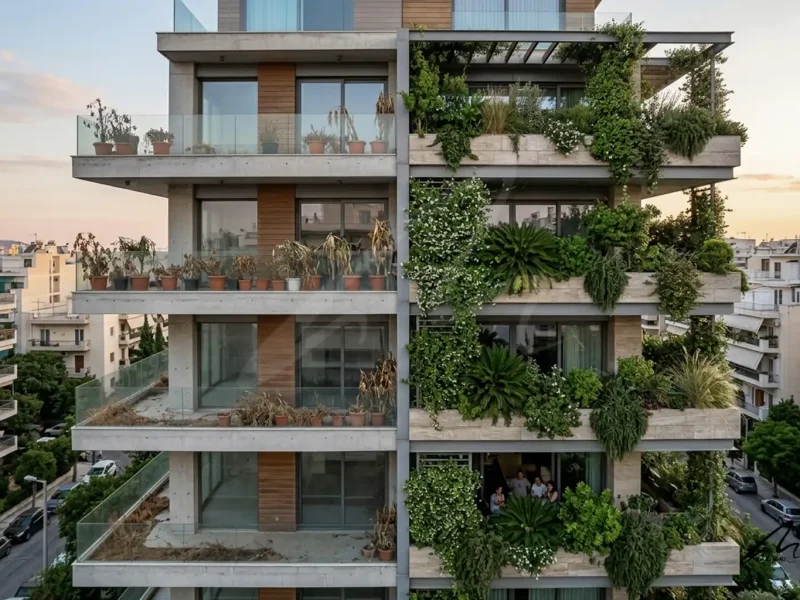
City-scale analysis reveals that the most ‘efficient’ cities often have the highest mental health costs. We see this in hyper-dense developments that prioritize floor-area ratio (FAR) over biological integration. This is a false efficiency. The result is a city that fails its people before it fails structurally. To fix this, we must treat greening as a distributed network rather than a centralized utility. This is the only way to ensure that the 55% risk reduction is available to all citizens, not just those in luxury enclaves.
You Might Be Wondering
Honest answers to real objections
Q1Isn't the mental health benefit just because wealthy people live in greener areas?No, the benefit persists even after accounting for income and social class.+
Q2What is the minimum amount of green space required to see these results?There is no single threshold — consistency matters more than size.+
Q3Trees are expensive to maintain — shouldn't we prioritise housing density first?Density without greening is a long-term liability.+
Ready to Charge What You’re Worth?