

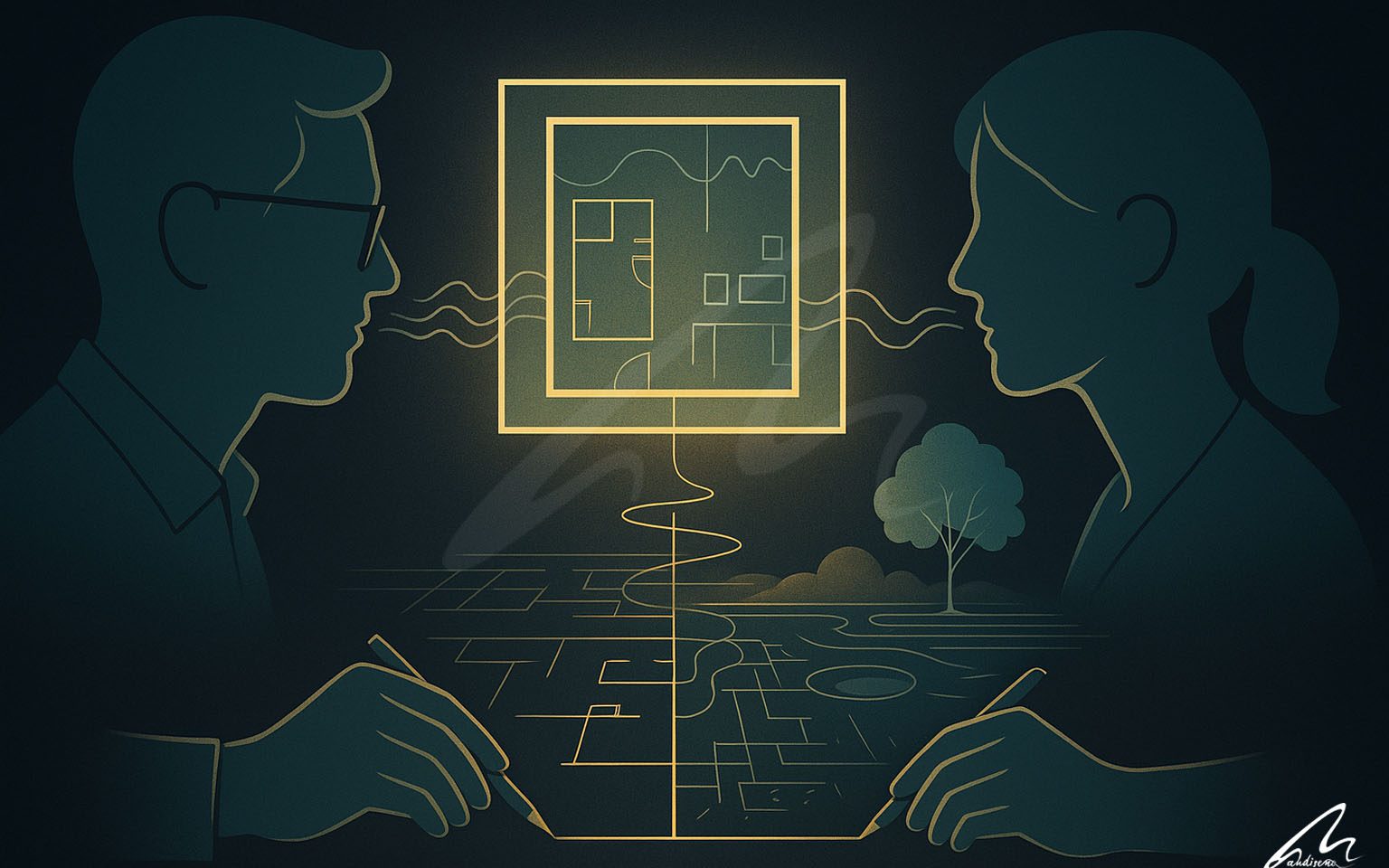
So, you’ve decided to build a house. Not just any house—your dream home. You’ve got the Pinterest boards filled with inspiration, the Houzz collections neatly organized, and a general idea of what you want. That’s great. All that dreaming is the easy part. But before you get lost in the sea of beautiful pictures and shiny concepts, there’s one single, most important step you need to take. It’s not about permits, not about finding land, and not even about a loan. In fact, it’s about a human connection. It’s the first conversation with an architect.
A lot of people think this is just a quick chat, a coffee to “see if we click.” That’s a mistake. This is, in fact, the foundation of your entire project. This conversation is where you get to decide if this is the person you want to spend the next 12-18 months of your life with, working through the stressful, exciting, and sometimes frustrating process of building. And guess what? The architect is doing the exact same thing to you. This is a two-way interview, and you both need to show up prepared. Without this right start, your project could turn into a house of cards. Furthermore, this isn’t just about a potential design; it’s about building a partnership.
The reason this conversation is so critical is that it sets the tone for everything that follows. Ultimately, it’s the moment where abstract dreams begin to meet the hard reality of budgets, building codes, and timelines. The architect’s job is to take your vision and turn it into a buildable reality, and your job is to give them the right information to do that.
What You Need to Bring to the Table
To make sure your first conversation with an architect is productive, you can’t just show up empty-handed. Do your homework. This isn’t a test, but it’s a way to signal that you’re a serious client who respects their time and expertise.
1. The Real-Life Wish List
Go beyond the pretty pictures. Ask yourself: what are the non-negotiables? Do you need a guest suite for your parents? An office for working from home? A mudroom for the kids and the dog? Don’t just list rooms; list how you live. For example, instead of saying, “I want a big kitchen,” say, “We host a lot and need an island that can seat six people, and a double oven for holiday baking.” By being specific about your lifestyle and habits, you give the architect pure gold to work with.
2. The Inspiration (and the “Why” Behind It)
Yes, bring the Pinterest board, but also be able to articulate why you like a certain image. Do you love the natural light in that dining room? Is it the open floor plan that connects to the outdoors? Or perhaps the specific material choices in the bathroom? Context is everything. It’s not about copying an image; rather, it’s about capturing a feeling or a function. An architect can’t design your dream home from a picture alone, but they can use it as a starting point to understand your aesthetic and functional desires.
3. The Budget (A Non-Negotiable)
I know, I know. Nobody wants to talk about money. It feels awkward, or you think you’ll give away your leverage. However, you absolutely, without a doubt, have to. Be honest and direct. Giving the architect a realistic budget up front is not a weakness; on the contrary, it’s a sign of a serious client. If you have no idea what homes cost to build in your area, do some preliminary research. Reach out to a builder for a ballpark number. Without a budget, you are asking an architect to design in a vacuum, which leads to designs you can’t afford, and a whole lot of wasted time for everyone involved. Trust me, architects hate designing something that can’t be built just as much as you hate seeing a price tag you can’t swallow.
4. The Property Information
If you have a specific piece of land, bring the survey. This document tells the architect everything they need to know about the land, from boundaries and setbacks to utility easements and topography. This information is vital for understanding what you can legally build on the property and, furthermore, can prevent major headaches and redesigns down the line. If you don’t have the land yet, you can still have a great initial conversation, but be clear that you’re still looking.
The Conversation: Questions You Need to Ask
Remember, you’re the one in charge here, so you need to ask the right questions.
Questions About Their Process
- How do you approach the design process? Do they work in distinct phases? Do they use a collaborative process, or do they present fully-formed ideas?
- What happens after this meeting? What are the next steps? What can I expect to receive?
- How do you handle changes and revisions? What does the process look like if I want to make a change during the design phase?
- What’s a realistic timeline for a project like mine? Architects have a good sense of how long each phase takes, from schematic design to permitting.
Questions About Their Business
- What is your fee structure? Do they charge a fixed fee, an hourly rate, or a percentage of the construction cost? It is crucial that you are clear on this.
- What’s included in your fee? What’s not? For example, does it include consultant fees for structural engineers or interior designers? What about site visits during construction? Never assume anything.
- Who will be my point of contact? Will you be my main point of contact, or will a project manager or junior architect be handling the day-to-day?
- Can you provide references? This is a simple request, but it’s a powerful one. A good architect will be happy to connect you with past clients.
Questions About Construction & Reality
- What is your role during construction? Will they be there for site visits? How do they handle contractor questions or issues that arise?
- How do you help clients stay on budget? Do they provide regular cost estimates? Do they work with a specific cost estimator?
- What are some common challenges you’ve seen on projects like this? This question can reveal a lot about their experience and their problem-solving skills.
The “Vibe” Check: Are You a Good Fit?
Beyond the technical questions, this meeting is also about a gut feeling. Can you talk to this person? Do you feel heard? Does their personality mesh with yours? Building a house is an emotional rollercoaster, and you want to be on that ride with someone you trust and respect. If something feels off, listen to that feeling. After all, this person is not just a service provider; they are a key partner in a deeply personal and significant project.
Common Mistakes to Avoid in This First Meeting
You want to make a good impression, too. Here are a few things to avoid:
- “Just Give Me a Price.” An architect can’t give you a final price without a design. Instead, ask for a fee proposal for their services, not a construction cost.
- Hiding the Budget. As I said before, this is a fatal mistake. You will end up with a design you can’t build, and as a result, the process will become painful and frustrating.
- Being Unprepared. An architect can tell pretty quickly if you’ve put in the effort. Showing up with a vague idea and no photos or thoughts about your needs suggests you may not be a serious client.
What Happens After the Conversation?
The meeting is over. Now what? The architect will likely send you a proposal for their services, which should clearly outline the scope of work, the timeline, and the fee structure. This is not a contract; it’s an offer. Read it carefully and ask questions. This is your chance to get clarity on everything you discussed.
Your first conversation with an architect is the moment your dream home goes from a fantasy to a potential reality. It’s the step that provides a roadmap and puts a real person at the helm of your project. It’s an investment in the future success of your home, and it’s the best way to ensure you start your journey on the right foot. Therefore, don’t skip it, don’t rush it, and don’t underestimate its importance.
Ready to Charge What You’re Worth?